Bring Font Review: A Classy Script for Elegant Branding Projects
I was in the middle of a boutique branding project when I stumbled upon Bring, a Script Handwritten font that immediately caught my eye. The client was launching a new line of artisanal skincare products, and they wanted something that felt personal yet refined — not too casual, but definitely not corporate. After testing Bring across multiple touchpoints like logo drafts, brand boards, packaging mockups, business cards, and social media templates, I found myself reaching for it again and again. Let me walk you through why.
Bring for Wedding Invitations and Elegant Branding
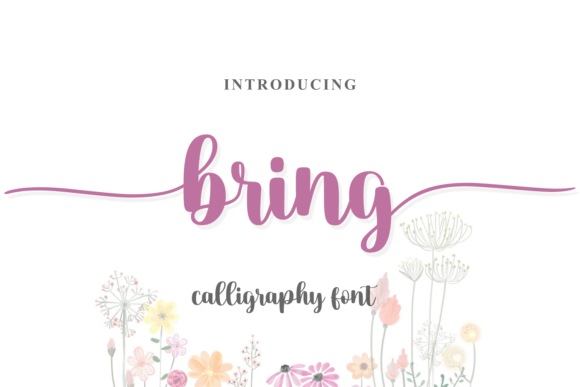
Wedding invitations are one of the most delicate applications for any Fonts. They need to exude warmth, sophistication, and attention to detail. When I first tested Bring on a sample wedding invitation layout, I was impressed by how its Script Handwritten style brought a sense of authenticity and charm without feeling overdone. The curves were smooth, the letterforms had just enough variation to feel handcrafted, and the PUA encoding made accessing special characters and ligatures effortless.
What stood out was how well Bring balanced elegance with approachability. It didn’t have the frilly look of some other script fonts, which can sometimes feel more like costume jewelry than a real typeface. Instead, Bring offered a clean, confident personality that could easily be used in both print and digital formats for events or product branding.
Bring in Logo Design and Business Card Mockups
In logo design, Bring truly shines. I applied it to a café rebranding concept, pairing it with a minimalist sans serif for contrast. The result? A warm, inviting mark that still maintained professionalism. For the business card mockup, I loved how it looked even at small sizes — as long as the text wasn’t too dense. Its character spacing is generous, so it reads well when used for short phrases or taglines.
One thing to note is that Bring works best in logos that don’t require large amounts of text. It’s ideal for names, mottos, or accents rather than full sentences. That said, if your project leans into a soft, handwritten aesthetic, this handwritten font will elevate your visuals significantly.
Bring for Packaging Labels and Product Branding
For product labels, especially in the handmade or luxury niche, Bring adds a level of craftsmanship that feels intentional. I tested it on a few mockups for skincare jars and gift boxes, and it gave the impression of a brand with soul. The Script Handwritten nature of the font helped create a tactile, artisanal vibe that really resonated with the visual language of natural and organic products.
Its performance on curved surfaces and small packaging elements was solid, though I’d caution against using it for long descriptions or fine print. It’s a display font at heart, and while it holds up surprisingly well in tighter spaces, it’s not meant for lengthy body copy. Still, for product titles, brand names, and short calls to action, Bring delivers a polished, memorable look.
Bring on Websites and Social Media Layouts
When it came time to test Bring in web design and social media layouts, I was curious about how it would render across different platforms. I used it in a homepage hero section for a creative studio identity and found that it loaded smoothly and scaled well. As a premium font, it handled high-resolution displays beautifully, preserving the texture and flow of the handwriting.
On Instagram posts, Bring added a human touch to lifestyle imagery and quote graphics. It’s perfect for short captions, branded headers, or accent text in feed designs. Just make sure to pair it with a more structured typeface for readability in longer blocks of content. I paired it with a light-weight sans serif for website navigation and body text, and it created a lovely contrast between the fluidity of Bring and the clarity of the supporting font.
Using Bring in Web Design
If you’re considering Bring for a web design project, check if the font includes a webfont version or WOFF/OTF files. You’ll also want to ensure that the licensing allows for online use. Since it's PUA encoded, you might need to install it locally or use a font embedding tool to access all the glyphs reliably.
Bring for Brand Identity and Creative Studio Projects
Brand identity is where Bring really comes into its own. In one recent project for a local creative studio, I needed a font that felt both artistic and trustworthy. Bring fit the bill perfectly. It conveyed creativity without being too quirky, and its classiness aligned with the studio’s focus on quality and originality.
I used Bring in several ways:
- As the main headline font for their portfolio site
- In brand board compositions alongside mood colors and textures
- For internal name badges and team member introductions
- On printed materials like posters and flyers
Each time, it added a subtle layer of personality. The consistency of the strokes and the slight variations in weight and form made it feel alive, almost like someone had written the brand name just for them.
Font Pairing Suggestions for Bring
Since Bring is a decorative Script Handwritten font, it pairs best with neutral, modern typefaces that let it take center stage. Here are a few combinations I’ve tried successfully:
- Bring + Lato: Clean sans serif complements the handwritten flair
- Bring + Merriweather: Adds a classic, readable base for editorial or web use
- Bring + Montserrat: Works great for a contemporary creative studio or fashion brand
Remember to always keep the hierarchy in mind. Bring should support the message, not obscure it. Use it for headlines, names, or quotes — and keep the rest of your typography grounded and legible.
Alternates and Ligatures in Bring
One of the standout features of Bring is its thoughtful inclusion of alternates and ligatures. These little touches make a big difference when building out a cohesive brand identity. I found the alternate characters particularly useful in logo iterations — they allowed for a more personalized look without needing custom illustrations or vector work.
The PUA encoding ensured that those special glyphs showed up correctly across Adobe apps and other design software. No wrestling with missing characters or broken ligatures — just a smooth workflow from sketch to final output. If you're working on an event poster, branding suite, or anything with a bit of flourish, these extras can help you stand out in a good way.
When Not to Use Bring
Though Bring is incredibly versatile, there are a few scenarios where it may not be the best choice. Avoid using it for:
- Long paragraphs of body text (obviously)
- Small body text in low-resolution print
- High-traffic websites with lots of user interaction
- Formal corporate documents or legal signage
It’s simply not built for heavy reading or formal contexts. But if you're designing a bakery’s window sign, a handmade shop label, or a cozy café menu, Bring is a perfect match. It’s the kind of font that makes people pause and notice — exactly what you want in a brand that aims to stand out.
Testing Bring Before Finalizing Client Work
Before recommending Bring to a client, I always do a quick test run. I’ll build a small brand board with the font applied to key elements like the logo, business card, and social media header. This helps visualize how it functions across different mediums and scales.
You can also download free samples or preview tools to see how Bring looks in various weights and styles. Even though it's a single-style font, the PUA encoding gives you flexibility in character expression. If the client wants to use it in commercial assets like merchandise or packaging, double-check the font’s licensing terms to avoid future issues.
Final Thoughts on Bring and Commercial Font Licensing
Always remember to review the commercial font licensing before using Bring in client projects. Depending on your usage — whether it’s for a logo, template, website, or print-on-demand product — you might need a specific license. Many premium Fonts offer flexible options, but it’s important to clarify what you’re purchasing and how it aligns with your intended application.
Overall, Bring is a fantastic addition to any designer’s toolkit, especially if you're working with brands that value authenticity, elegance, and a touch of artistry. Whether it's for a boutique, a local restaurant, or a craft-based business, this Script Handwritten font has the right balance of charm and professionalism to leave a lasting impression.